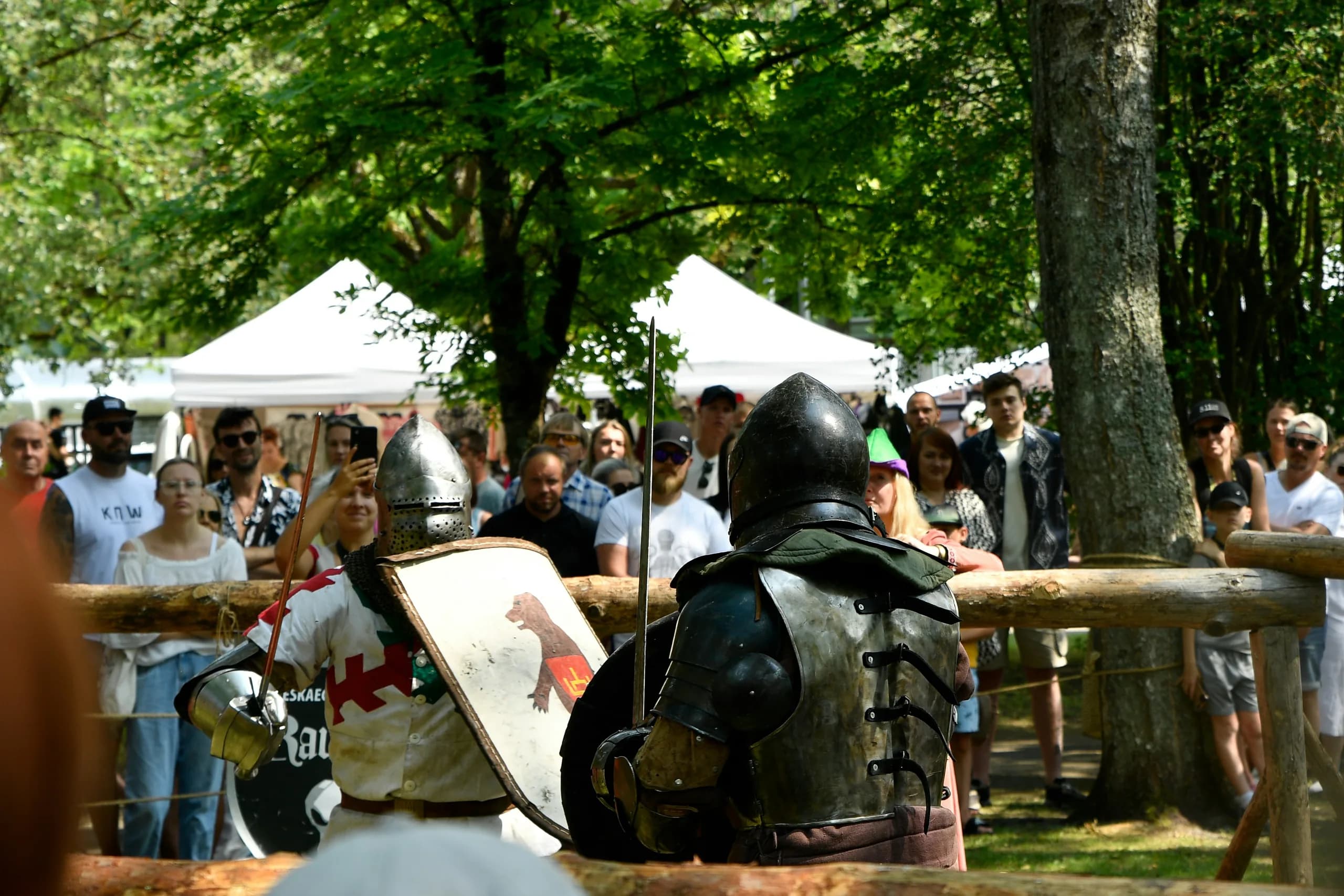
The High King's Tournament
Celebrating 1100 years of martial spirit, courage and skill.
Experience the clash of steel, the thunder of hooves and the roar of the crowd at the High King’s Tournament on Sunday 4th July 2027.
In honour of Æthelstan, the first ruler of a unified England and overlord of Britain, we will be hosting a day of duels and jousts, bringing into the present the spirit and form of the medieval tourney.
This event is a sporting competition. All the contestants, whether on foot or on horseback, compete in real, armoured combat. Using blunted weapons, they will land physical blows to defeat their opponents. This is not a show or play-acting: each participant will face physical danger in the pursuit of honour and glory. They fight to win the greatest of titles, to be named the Champion of the Kingsflame.
The call has been heard. Warriors from across the land have been summoned. Sword, lance and shield shall meet as they did 600 years ago.
The Grand Entry
Spectacle marked the beginning of a medieval tournament. Inspired by the pageantry that was a feature of the medieval tourney, music and dance introduce the High King’s Tournament.
The ancient war horn of the Celts, the carnyx, will deliver the opening fanfare. Its calls echo over the landscape, a haunting sound that terrified Roman soldiers in the misty forests as they searched for the elusive Celtic Britons. The carnyx will sound the commencement of the tournament, an ode to the ancient origins of the Kingsflame.
Minstrel Majesty, masters of medieval music, will be leading the Piper’s Village in a display of whirling jigs and circle dances. Accompanied by the hurdy gurdy, the shawm, tabor and many more instruments, witness the driving rhythms of popular folk dances and the poise of courtly balls brought to life with heart pounding energy.
Foot Combat
Aspiring contenders from The Knight’s Village and Get Medieval will participate in a competition guided by René of Anjou’s ‘The Book of the Tournament’. Written in 1460, this manual directs the codes of behaviour, ceremony and combat that governed the tournament field. It was the gold standard for defining a knight’s conduct as an exemplar of the chivalric code and military prowess.
Divided into teams, the Squires and Knights will be assessed in a number of ways. The Judge of Arms will assess their heraldry, equipment, identification and tournament eligibility. The Judge of Deeds considers their conduct, honour, rule-breaking and sporting behaviour. The Judge of Skill will mark their performance in martial challenges and demonstrations in a series of one-on-one bouts. Finally, The Judge of Courtesy observes their behaviour towards opponents, guests, ladies, squires and the wider camp.
In each category, the highest scoring individuals and teams will win the honour of being named Champions of the Kingsflame.
Mounted Jousts
From the arena the action moves to the tiltyard. The centrepiece of the medieval tournament, jousting and cavalry displays were the ultimate demonstration of a warrior’s prowess. The victorious gained legendary status, acquiring fame and patronage from noble ladies and mighty kings.
Riders from Destrier will be demonstrating their proficiency in the saddle in a series of challenges. They will first show their worth in a display highlighting their skill at arms, testing themselves before battle. These were a test of a knight’s ability to control a 1500 pound warhorse while wielding weapons with lethal precision.
The tournament will climax with a joust. Destrier’s 15th century knights will face each other in the ultimate competition. Charging towards each other at speeds close to 40mph, smashing real eleven-foot wooden lances into real steel armour, they will compete to hit their opponents. The winner will be crowned Champion of the Kingsflame.